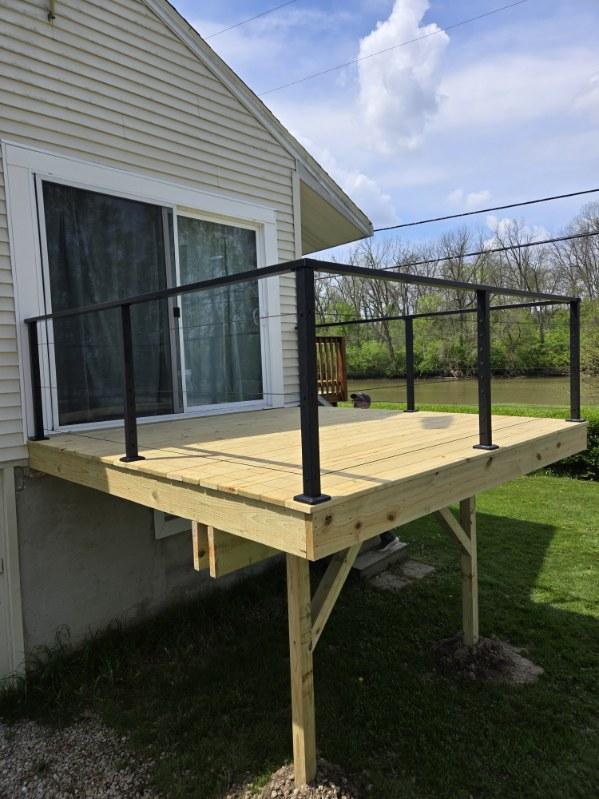
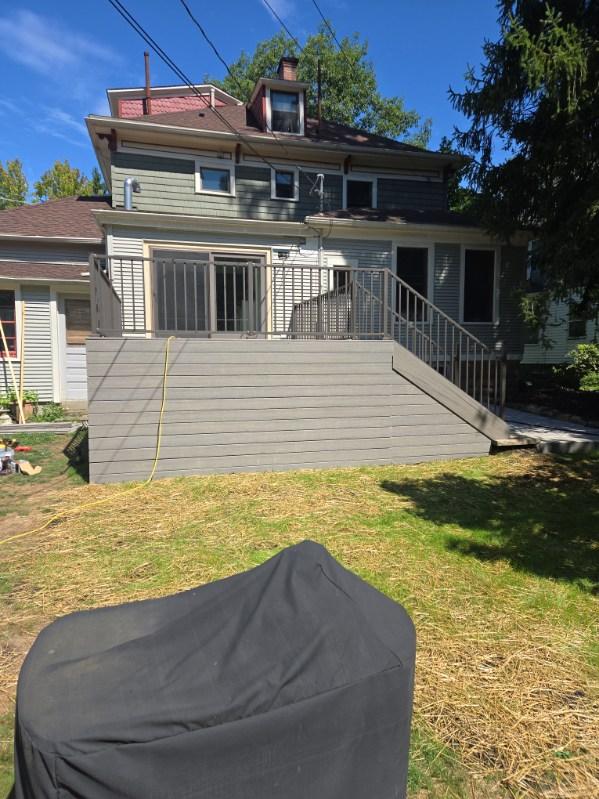
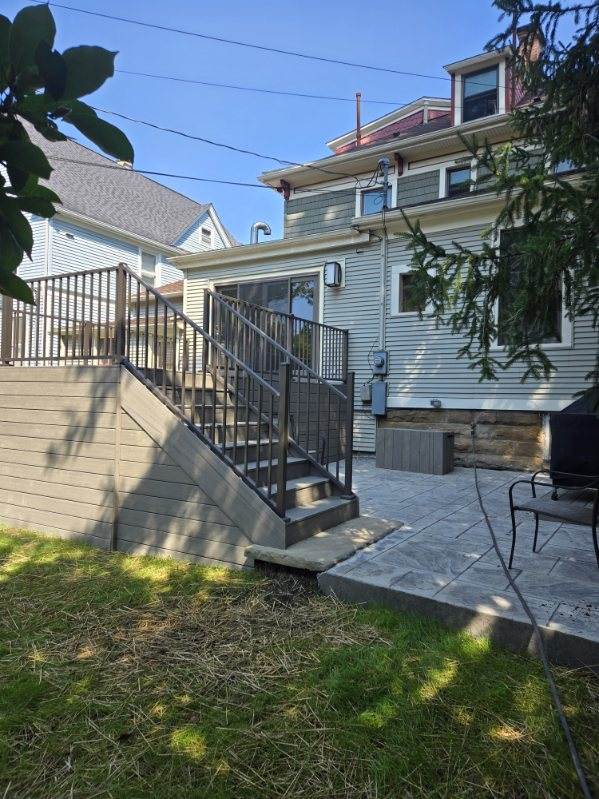
Clean Construction / Decks / Brunswick, Ohio
Wood and composite decks for Brunswick — colonials and splits from the boom years, plus the newer subdivisions. Footings below frost, ledgers flashed right, permits handled with the city.
Brunswick grew fast in the '60s through the '80s and became Medina County's biggest city — street after street of colonials, splits, and ranches that are now on their second or third owner. Which means a lot of Brunswick decks are on their second or third life too: original builds from the '90s with undersized footings, rusting hardware, and ledgers nailed — not bolted — to the house. Tear-off and rebuild is the most common deck job Brad does here.
Rebuilding right means fixing what the first build skipped. Footings dug below the 32-inch frost line to undisturbed soil instead of sitting on buried patio blocks. A ledger that's flashed and through-bolted into the rim, not face-nailed through siding. Modern hardware at every post and joist. It's the difference between a deck that wobbles at year ten and one that shrugs off year thirty.
For Brunswick's newer subdivisions the job looks more like North Ridgeville's — finishing what the builder left off, sized for how the household actually uses a backyard. Either way, permits run through Brunswick's building department, and Brad manages the drawings, application, and inspections while you pick decking colors.
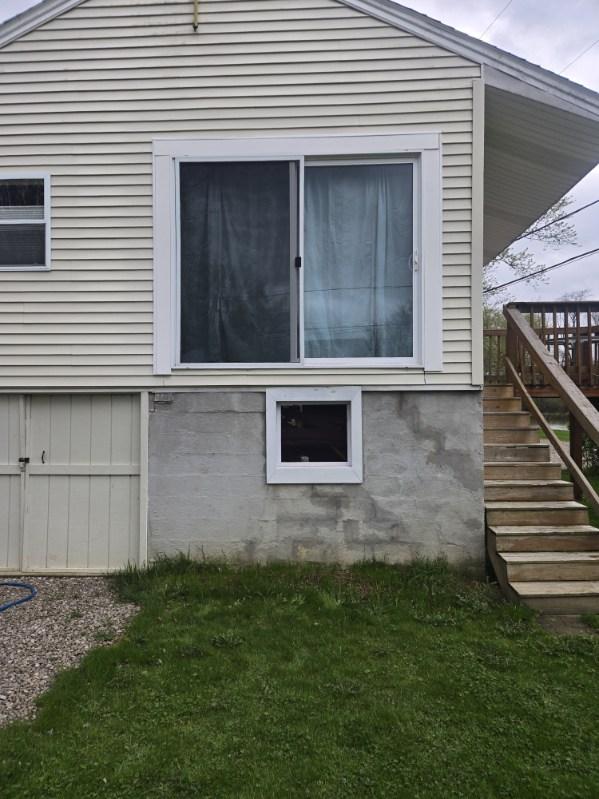
Northeast Ohio frost drives 32 inches down, and the clay-heavy ground around Brunswick will heave anything sitting shallower. Every footing is dug below the frost line and poured on undisturbed soil — then inspected before a single post goes up.
Most deck failures start at the house connection. Brad opens up the connection point, flashes it correctly, and through-bolts to actual structure — or builds the deck freestanding on its own footings when that's the honest answer for your house.
Clay lots don't forgive bad water planning. Before the layout is final, Brad looks at grade, downspouts, and where roof water actually goes — so the ground under your deck stays solid instead of turning into a spring swamp.
The permit runs through the City of Brunswick Building Department, and the job gets inspected at the stages the code requires. Brad handles all of it — drawings, application, inspector on site. The paper trail protects you when you sell.
More projects, including additions, patios, and retaining walls, in the full portfolio.
Size, height, wood or composite, rough budget if you have one. Vague is fine — "we want somewhere to eat outside" is enough to start the conversation.
He looks at the house connection, the grade, the soil, the door heights, where the sun lands in the evening. This is where a deck stops being a rectangle on paper and starts being your deck.
Framing, decking, railings, footings, permit — line by line. Wood and composite priced side by side if you're deciding. Nothing buried, and money is settled in the contract before anything starts.
Permit pulled, footings inspected, frame up, decking down, railings on, final inspection passed. Brad is on site through it, hands on most of the work. Most decks take one to two weeks of build time.
In most cases, yes. Attached decks and most decks of any real size need a building permit, which runs through the City of Brunswick Building Department. Brad handles the permit application, drawings, and inspections as part of the job — you never deal with the counter.
The Residential Code of Ohio requires footings to bear below the frost line — 32 inches in this part of the state. Every Clean Construction footing goes below that depth so the deck doesn't heave when the ground freezes. Shallow footings are the most common failure on older decks in Northeast Ohio.
Pressure-treated wood costs less up front and takes any stain, but wants cleaning and re-sealing every couple of years. Composite costs more up front and is essentially wash-and-go. Most decks Brad builds run a treated frame with composite decking — but he'll price both honestly at the site visit and let the numbers talk.
Most residential decks run one to two weeks of build time once the permit is issued and materials land — longer for multi-level builds or extras like covered sections and built-in benches. You get the schedule before work starts.
It depends on size, height, material, and railing choices, so Brad doesn't quote blind and you shouldn't trust anyone who does. He walks the site, then you get a written, itemized estimate with every line explained. The site visit and the estimate cost you nothing.
Bounce usually means undersized joists, bad spans, or footings that have moved — structural problems, not cosmetic ones. Brad will crawl it and tell you straight: if the frame is genuinely sound, a re-deck with new surface and railings can make sense; if the footings and frame are the problem (common for that era in Brunswick), repair money is wasted money and a rebuild is the honest answer. The inspection costs you nothing either way.
Fill this out or call him directly. Either way you're talking to the person who builds it.
Brad will call you back the same day. If it's urgent, call him directly at 440-315-4438.